
Flow
Flow is "When an activity's difficulty matches your skill level and you feel fully engaged."

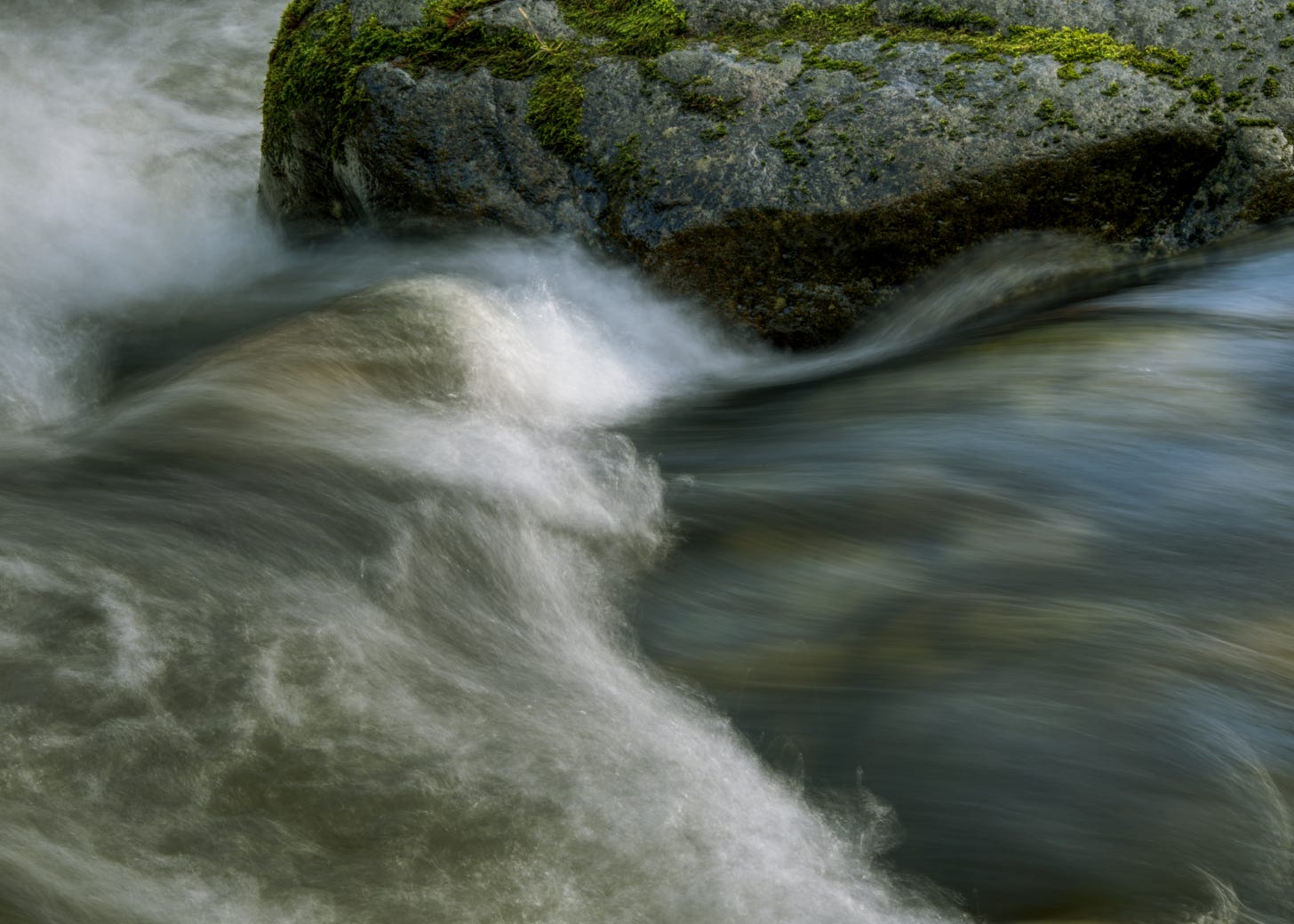
Types of Flow
The term flow was popularized by Mihaly Csikszentmihalyi in the 1970s. It refers to a state of deep concentration and absorption in an activity because of a balance between the challenge of the task and the skill level you have for that task. When you are confident you can meet the challenge, you experience optimal engagement and intrinsic motivation.
Dave Evans suggests that this state lies in a sweet spot between anxiety and boredom. If your skill is not sufficient, you experience anxiety (it is too hard!) and if the task is too easy you experience boredom (I need something more challenging).
Evans, working out of the Stanford Life Design Lab he co-founded, has extended the idea of flow, noting that meaning arises not from future achievements (the completed task), but from full participation in the present moment (the flow state).
Flow, therefore, offers an “intense experience of being alive,” making even mundane tasks meaningful if we can change the way we view them. For a good introduction to Dave Evan’s work, try the podcast at Good Life Project.
Flow World vs. Transactional World
Evans contrasts the “flow world,” which values presence and experience, with the “transactional world” focused on output and impact. Much of life is framed by transactions. For example going to work to receive a paycheque. But transactions and the measures of performance that determine how much we can transact, have a dark side. It is called the cult of productivity, a kind of brain washing that is deeply imbedded in western culture. Much of the “motivational” style of coaching has been directed at goal setting and goal achieving, trying always for maximum impact. Such work is important, we all like to feel able and competent, but the world of impact has overshadowed the flow world of “presence.”
Evans, who led the design of Apple's first mouse and is a Consulting Assistant Professor at Stanford University, is no stranger to maximum impact. He made a name for himself with excellence in design and productivity, and has worked to balance high achievement with “simple flow” — what he describes as engaging with reality in the current moment. Rather than it all being about peak performance, he invites us to see the compliment, something I paraphrase as Deep Presence.
Deep Presence?
How does one cultivate deep presence in your life?
Both psychology and spirituality have long recognized the value of deep presence for healthy communities and individuals. This is sometimes described as, “the practice of the presence,” “holding space for others,” “mindfulness,” and other terms that emphasize setting aside ego-focused activities for truly “being”.
Join with the Flow
P.T. Mistlberger in his book, Rude Awakening, says that the word translated as Zen, Cha’an, and dhyana are sometimes translated in English as meditation but, “In fact [the original] carries complex meaning, denoting various levels of progressive deepening of meditation, but the essence of the meaning of the word is to ‘join with the flow’ of each moment. This is a key insight because in the realm of experience, there actually is no ‘now’, because all is in perpetual flux, perpetual change, like a moving river. The only thing static is consciousness itself. To meditate, in the true sense of the word, is to move beyond the constant change of existence, into the immutable and crystal-clear nature of pure awareness.”
This Buddhist idea of joining with the flow is in alignment with Evans’ work. Life is a perpetual flux, full of change and uncertainty, and so, much of the time, we will not feel up for a task. This can be because of a lack of confidence, or because we have suffered a series of legitimate defeats.
Still Stream Coaching focuses on increasing the flow rather than just increasing the productivity. This is done through Stream Work — carefully looking at the landscape of your life to see how to get better flow in all the streams of that landscape. It’s like you are going over each stream and removing impediments to flow and adding texture, technology, and structure to help regulate the flow so that activities don’t erode you with their energy.
It is not a question of how to avoid challenges and failures, it is question of how to face them, and what do we take away from them. The golden truth in this is learning. All these experiences are about learning and becoming a better human being. By refocusing on the becoming and on the being, we re-balance life so that what we do is in balance with who we are.
This decision to consciously improve flow, and feel the flow, is a practice, like meditation or exercise, or playing a musical instrument, with the difference that the sense of flow is not some far off reward for hard work. Instead it is a shift in perception. Even in failure there can be flow, even in stillness there can be a sense of movement. Flow, in this wider context, is the movement of attention and intention between doing and being. Both are part of the whole.
With this perspective of balance, we can follow the flow to what we truly want, and for many that might be more productivity, more money, or more esteem, but it might also be less stress, less busyness, and less drudgery. Meaning is found in different places for different people. For some it is making something, for others it is being with someone. When we can stay connected with meaning and purpose we can also face life’s challenges, whether we have the skills or not.
Flow of this kind, almost always starts as a trickle. But the more we make a channel for it, the more natural it becomes; and little by little, we open a path so that flow can occur more often and more freely.